


Phonics Reform England: Not reading reform. Phonics reform. Improving phonics for the one in five at risk of struggling to read and spell.

Why Letter Formation Matters, Especially for At-Risk Children
Why Letter Formation in Reception Matters So Much
Letter formation matters because it sits right at the point where thinking meets doing. For some children, especially those at risk of literacy difficulties, this connection is fragile. If we get it right from the start, we remove a huge barrier. If we get it wrong, we can unintentionally build one.
When a child is forming a letter, they are not just drawing a shape. They are coordinating movement, memory, and their understanding of how speech connects to print. That’s a lot for a four or five year old.
For at-risk children, this load is even heavier. If letter formation is inefficient, effortful, or inconsistent, it takes attention away from what really matters, linking sounds to graphemes and building secure word knowledge.
Starting Points, Exit Points, and Why They Matter
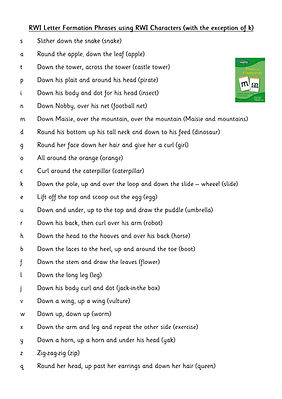
We strongly recommend using clear formation phrases, such as those used in Read Write Inc..
These phrases do more than help children remember a movement. They anchor:
-
where the letter starts
-
how the movement flows
-
where the pencil exits
For example, it is very difficult to start at the bottom of n if the child is saying:
“down Nobby, up and over his net”
The language and the movement have to match.
This matters because consistent starting and exit points:
-
reduce cognitive load
-
support muscle memory
-
help children form letters automatically over time
-
create a natural link between movement and the commonly associated sound
We haven’t seen anything more effective than these kinds of embedded phrases for early learners.
Keep the Pencil Moving: Flow Over Print
We recommend teaching with exits in mind so that children can move naturally into the next letter without lifting the pencil.
The goal is flow.
Not stop-start printing.
When children can keep the pencil on the page:
-
writing becomes more fluid
-
effort is reduced
-
the process better aligns with how the brain is working through phonemes and linked graphemes
-
it supports later joining without needing to relearn movement patterns
Print-style writing, where the pencil lifts constantly, interrupts this flow and adds unnecessary effort.
Size Matters Less Than You Think
It’s less important to focus on absolute size, and more important to focus on proportion.
Children will naturally:
-
write larger or smaller
-
develop a slight slant
-
show differences based on handedness
That’s normal.
What matters is the relationship between letters, not making everything look identical.
Comfort, Readiness, and Physical Demand
Many children in Reception are not developmentally ready for sustained writing.
That’s important to understand.
Letter formation can feel:
-
tiring
-
unnatural
-
effortful
So we need to:
-
make sure children are sitting comfortably
-
reduce strain as much as possible
-
avoid overloading them with long writing tasks
If their hands get tired, everything breaks down, including attention, accuracy, and motivation.
Don’t Confuse Writing with Understanding
One of the biggest mistakes is assuming that what we see on paper reflects what a child understands.
It doesn’t.
A child may:
-
fully understand how speech connects to print
-
know what graphemes represent
-
be able to map sounds accurately
…and still struggle to form letters.
These are different processes.
For four and five year olds, understanding comes before execution, and it matters far more.
But Watch for Habits Early
Even though understanding is the priority, poor habits in letter formation are hard to undo later.
So we need to:
-
model carefully
-
watch closely
-
correct early
A “perfect-looking” letter doesn’t mean it was formed correctly.
Most errors happen in:
-
starting points, often starting at the top instead of where intended
-
stroke direction
-
exit points
These hidden habits affect fluency later.
Use a Child-Appropriate Font
We recommend using a font such as Sassoon Infant.
This matters because it reflects how children actually form letters, rather than how adults print them.
It supports:
-
visual consistency
-
easier imitation
-
clearer links between what they see and what they produce
In Summary
For at-risk children, letter formation isn’t just handwriting.
It is:
-
a motor process
-
a cognitive process
-
a linguistic bridge between speech and print
Get the foundations right:
-
clear starting and exit points
-
consistent formation phrases
-
flowing movement
-
realistic expectations about development
And you reduce effort, support fluency, and protect what matters most, the child’s understanding of how words work.
_page-0001.jpg)


Can't quite believe this was over a decade ago, but I still haven't found anything better.
Emma Hartnell-Baker introduces four-year-olds to the Read Write Inc. letter formation phrases in Queensland during a Speech Sound Play (pre-phonics) session.
This is a great example of how early learners can connect movement, language, and sound in a natural, playful way.
It’s also a useful reminder about something many of us do without realising. Adding a schwa to letter sounds.
We all do it. But when we become aware of how much it matters, especially for 1 in 5 children who find this harder, we start to make more conscious choices.
Keeping sounds clean and precise supports children to:
-
hear the phoneme clearly
-
link it more accurately to the grapheme
-
avoid confusion when blending and segmenting
A small shift in how we model sounds can make a big difference to how easily children build secure foundations.
Why This Matters Even More for Children at Risk of Dyslexia
For children at risk of dyslexia, letter formation is not just about handwriting. It directly affects how easily they can build and access word knowledge.
These children often experience:
-
difficulty holding phonemes in mind
-
reduced automaticity
-
higher cognitive load when working with speech and print
If letter formation is inefficient, it adds another layer of difficulty on top of an already demanding process.
Instead of supporting learning, writing can become a barrier.
Reducing Cognitive Load So the Brain Can Focus on Mapping
When letter formation is consistent and automatic:
-
the brain doesn’t need to think about how to form each letter
-
attention can stay on linking phonemes to graphemes
-
children are more likely to build secure word representations
For children with dyslexia, this matters enormously.
Their working memory is already under pressure. If they have to think about:
-
where to start the letter
-
how to move the pencil
-
when to lift it
they have less capacity left for processing the sounds in the word.
Clear formation routines, such as those supported by Read Write Inc. phrases, reduce this load.
Movement Supports Memory
There is a strong link between movement and memory.
When a child:
-
says the phrase
-
hears the sound
-
forms the letter in a consistent way
they are building a multi-sensory pathway.
For children at risk of dyslexia, these repeated, consistent pathways are essential. They help stabilise learning that might otherwise remain fragile.
If the movement changes every time, the pathway doesn’t strengthen.
Flow Supports Thinking
Children at risk of dyslexia often benefit from maintaining flow.
When writing is:
-
continuous
-
connected
-
not interrupted by constant pencil lifts
it better supports the “thinking flow” as they work through phonemes and linked graphemes.
Stop-start writing can:
-
break concentration
-
disrupt phoneme sequencing
-
increase frustration
This is why exits and continuous movement matter even more for these learners.
When Writing Becomes a Barrier
For some children with dyslexia, writing is so effortful that they avoid it.
This isn’t about motivation.
It’s about overload.
If:
-
letter formation is inefficient
-
the hand gets tired quickly
-
the process feels slow and effortful
then the child may disengage before they’ve had a chance to show what they know.
This is why it’s so important not to judge understanding based on written output.
A child may understand the structure of a word but be unable to show it on paper.
Early Habits Matter More for These Children
All children benefit from good habits, but for children at risk of dyslexia, early habits are critical.
Why?
Because:
-
they rely more heavily on efficient processes
-
they find it harder to override automatised errors later
-
inconsistent formation adds long-term confusion
If a child repeatedly starts letters incorrectly or uses inefficient strokes, it becomes embedded.
Later, this interferes with fluency and can even affect spelling.
Protect Understanding First
It’s important to keep this in perspective.
For young children, especially those at risk:
-
understanding how speech connects to print is the priority
-
letter formation is the tool, not the goal
A child can:
-
understand phoneme–grapheme relationships
-
segment and map words accurately
before they are physically ready to write them.
We must not confuse motor difficulty with lack of understanding.
The Balance
So the goal is not perfection.
It is:
-
clear, consistent formation from the start
-
reduced effort through good habits
-
protection of cognitive capacity
-
and always prioritising understanding over appearance
When we get this balance right, we remove barriers instead of adding them.
And for children at risk of dyslexia, that can make the difference between struggling with writing and being able to use it as a tool for learning.
We’re also often asked about cursive writing. This is not something we recommend for children at risk of dyslexia, especially in the early stages. Cursive adds an extra layer of motor complexity at the same time children are trying to secure phoneme–grapheme mapping, which can increase cognitive load rather than reduce it. Research shows that children with dyslexia often experience difficulties with handwriting fluency and letter formation (Berninger et al., 2006; Graham et al., 2008), and that writing places simultaneous demands on motor and linguistic processing (Medwell & Wray, 2008). When too much attention is needed for forming letters, it takes away from processing the sounds in words. Evidence also suggests that keeping handwriting instruction simple and consistent in the early stages supports better outcomes (Graham & Santangelo, 2014). Our focus is on clear, consistent letter formation with simple exits that allow for flow, without introducing unnecessary difficulty. Once children are secure in both their understanding and formation, decisions about style can come later.
-
Berninger, V. W., Nielsen, K. H., Abbott, R. D., Wijsman, E., & Raskind, W. (2006). Writing problems in developmental dyslexia. Journal of Learning Disabilities, 39(5), 414–427.
-
Graham, S., Berninger, V., Abbott, R., Abbott, S., & Whitaker, D. (2008). Role of mechanics in composing. Journal of Educational Psychology, 100(3), 620–633.
-
Medwell, J., & Wray, D. (2008). Handwriting: What do we know and what do we need to know? Literacy, 42(1), 10–15.
-
Graham, S., & Santangelo, T. (2014). Does handwriting instruction improve writing quality? Journal of Educational Psychology, 106(4), 879–896.
Number Formation Is Important Too, Especially for At-Risk Children
Number formation matters for the same reason letter formation matters: efficient writing depends on automatic motor patterns. When children consistently start at the top and form numbers and letters in the correct direction, the movements become automatised and place far less demand on working memory. This frees cognitive capacity for thinking about quantity, calculation, spelling, sentence construction and meaning, rather than concentrating on how to physically produce the symbol. Incorrect starting points and inefficient movement patterns can become deeply embedded habits that later interfere with speed, fluency and written expression. Consistent number formation supports recognition, orientation and memory for symbols, all of which are particularly important for children with dyslexia, dysgraphia, developmental coordination difficulties or other neurodivergent learning profiles.