Phonics Reform England: Not reading reform. Phonics reform. Improving phonics for the one in five at risk of struggling to read and spell.

Reform 6
-
Reform 1: Early Dyslexia Risk Screening
-
Reform 3: Self-Paced Phonics
-
Reform 4: Bidirectional Mapping
-
Reform 5: Technology That Shows the Code
-
Reform 6: Decodable Levelled Readers with Visible Code
Reform 6: Make Decodable Books Decodable for Every Child
On this page, we explore decodable readers, levelled readers and levelled readers that have been made decodable using the English Code Overlay, enabling the Phonics Pronunciation Code to be examined, particularly where it differs from the child’s internal pronunciation code.
Decodable books are not automatically decodable for every child simply because they follow a phonics programme’s teaching order. Whether a child can read a text depends on their code knowledge, vocabulary, accent, and the amount of additional work needed, such as partial decoding, set for variability, or using meaning to confirm the word.
Many children can move quickly into the self-teaching phase, while others need additional scaffolding for longer. Reform 6 argues that books should make the alphabetic code visible for as long as each individual child needs it, by showing which letters form graphemes and the sound value they represent. This also enables parents and teachers to create meaningful texts around children’s own interests, from football to Roblox, rather than relying only on generic decodable books.
Levelled Readers, Phonics Readers and Decodable Levelled Readers
Levelled Readers


What Are Levelled Readers (e.g. PM Levels)?
Levelled readers are books organised into a sequence of numbered stages designed to indicate increasing reading difficulty.
One widely used system in England is PM Readers, often referred to as “PM levels”.
In this system:
-
Books are numbered (for example, Level 1, Level 2, up to Level 30+)
-
Each level is intended to represent a step in reading development
-
Children are assigned a level and read books within that band
As the levels increase, the books typically include:
-
Less repetition
-
Longer and more complex sentences
-
A wider range of vocabulary
-
Reduced reliance on picture support
What Is Benchmarking?
Benchmarking is the assessment process used to determine which level a child should be placed on within a system such as PM Readers.
It usually involves a child reading a short, levelled text while the teacher records performance.
During benchmarking, the teacher typically observes:
-
Accuracy: how many words are read correctly
-
Fluency: the pace and smoothness of reading
-
Comprehension: the child’s understanding of the text
Based on this assessment, the child is assigned a reading level and given books from that level.
Benchmarking may be repeated over time to monitor progress and adjust the child’s level.
Why Levelled Readers Can Be Effective for Most Children
Levelled readers can be effective for most children because many develop strong phonemic awareness and oral language through everyday experience. If they are a series of connected books children become intrinsically motivated to keeping forward, to learn more about the character.
These children are often able to work out how speech and print connect without needing every word to align with taught GPCs.
How These Children Read the Text
Children with good phonemic awareness are able to:
-
Use partial decoding to access parts of words
-
Use context and vocabulary knowledge to support word identification
-
Apply set for variability, adjusting what they decode until it matches a known spoken word
-
Draw on their existing spoken language to confirm what they have read
They are coordinating multiple sources of information at once.
Implicit and Statistical Learning
These children benefit from implicit learning.
As they read, they are:
-
Picking up patterns in how speech and print connect
-
Noticing how GPCs operate across words
-
Learning from repeated exposure to print
This is often described as statistical learning, where the brain detects regularities over time.
As a result, many children:
-
Become more fluent
-
Recognise more words
-
Expand their reading vocabulary quickly
-
Develop identifies as readers
Reading itself becomes the driver of further learning. Through this process, children are effectively teaching themselves how the alphabetic system works.
Levelled readers also contain a high proportion of commonly used words. Much of children’s early reading material is made up of these words.
For children with strong phonemic awareness and oral language:
-
These words are encountered repeatedly
-
They are recognised and retained more easily
-
Reading becomes more fluent with each book
This allows them to:
-
Read more books
-
Gain more exposure to print
-
Write more, drawing on the words they have stored
Reading and writing reinforce each other, accelerating progress.
They:
-
Infer GPC patterns from the words they encounter
-
Refine their understanding with each new example
-
Strengthen the connection between speech and print over time
This aligns with the self-teaching account described by researchers such as Mark Seidenberg.
Why This Worked for Many Children
Levelled readers worked for many children because they were able to:
-
Work out unfamiliar words
-
Learn patterns through exposure
-
Become increasingly efficient readers through practice
This is reflected in national outcomes. Before the statutory shift towards systematic synthetic phonics in England, around 84% of children were reaching the expected standard in reading by age 11.
This does not mean all children were equally supported, but it does show that many were able to learn successfully through exposure to text, supported by their language knowledge and implicit learning processes.
Summary
For most children, levelled readers can support reading development because they enable:
-
Partial decoding combined with language knowledge
-
Implicit and statistical learning
-
Self-teaching of GPC patterns through reading
These children are able to build the speech–print connection through experience, even when it is not made fully explicit.

By the time children are reading pages with this amount of text, they have already been exposed to the vast majority of the words and are consolidating prior learning.
WMM activities such as Speedie Paired Decoding reinforce the speech sound-to-print connection.
Use with Snap and Crack to track how children are processing the words and to check for fluency and comprehension.
Why They Weren’t Enough for 1 in 5 Children
While levelled readers worked for many children, they were not sufficient for all.
Around 1 in 5 children did not reach the expected standard in reading. These children were not able to rely on the same processes that supported others.
What Was Missing
Children who struggled typically did not have the same level of:
-
Phonemic awareness
-
Precision in perceiving and producing speech sounds
-
Secure connection between speech and print
-
Vocabulary knowledge to support prediction
Without these, the strategies that worked for others were not available to them. They did not want to read. They experienced anxiety, and motivation to read decreased.
Why Partial Decoding Was Not Enough
These children were less able to:
-
Use partial decoding to access words
-
Adjust pronunciation through set for variability
-
Confirm words using spoken language knowledge
When a word was unfamiliar, they had no reliable way to resolve it except through guesswork.
Limited Access to Implicit Learning
Implicit and statistical learning depend on accurate input.
For children at risk:
-
Word reading attempts were often inaccurate
-
Patterns were harder to detect
-
Connections between GPCs and sounds were not stabilised
This meant that exposure to text did not lead to the same level of learning.
Reading did not become a strong driver of progress.
What This Looked Like in Practice
These children were more likely to:
-
Guess words based on pictures or context
-
Memorise words without understanding their structure
-
Read the same books repeatedly without transferring knowledge
-
Struggle when texts became less predictable
Progress was slower and less secure.
Why Levelled Readers Didn’t Solve the Problem for 1 in 5
Levelled readers did not:
-
Make the speech–print connection explicit
-
Ensure that all words could be worked out using known GPCs
-
Provide a consistent way to approach unfamiliar words
For children who could not infer the system, this left a gap. They had to memorise words, or guess.
Summary
Levelled readers were not enough for around 1 in 5 children because these learners could not rely on:
-
Partial decoding combined with language knowledge
-
Implicit and statistical learning from exposure
-
Self-teaching through reading
Without a clear and reliable way to connect speech and print, reading remained effortful and uncertain.
Decodable (Phonics) Readers
What Are Decodable Phonics Readers?
Decodable phonics readers are books designed so that the words in the text can be read using the grapheme–phoneme correspondences (GPCs) that a child has already been taught.
These books are structured to align with a defined teaching sequence. At each stage, only specific GPCs are introduced, and the
words in the book are selected to match that knowledge.
In England, government guidance for validated systematic synthetic phonics programmes states that:
-
Texts children read independently should be fully decodable at every stage
-
They should be composed almost entirely of words made up of GPCs already taught
-
The only exceptions should be a small number of common exception words that have been explicitly taught
-
In early stages, even these exceptions should be kept to a minimum
This is intended to ensure that children can rely on their knowledge of GPCs when reading and experience success through accurate word reading.
How They Are Organised
Decodable readers are usually grouped into stages that follow a teaching progression.
For example:
-
Early stages include words that can be read using a small number of taught GPCs
-
Later stages introduce a wider range of GPCs and more complex word structures
The progression is cumulative. Each stage builds on what has already been taught.
What Children Experience
When reading a decodable phonics book, a child is expected to:
-
Use their knowledge of GPCs
-
Work through the words in the text using that knowledge
-
Read sentences that are constructed from those words
Because the text is controlled, the child is able to read the book using what they have already been taught.
How High-Frequency Words Are Taught
In decodable phonics readers, high-frequency words are included as part of the teaching sequence and are defined in relation to GPC knowledge.
According to Department for Education guidance, common exception words are:
-
Words that include GPCs that are unusual or not yet taught
-
Words that may include correspondences taught later in the programme (for example, said or me)
Programmes are expected to:
-
Teach children to read these words
-
Then teach them to spell them
-
Identify the part of the word that does not align with known GPCs
-
Introduce these words gradually over time
How This Works in Practice
Before reading a decodable book, a child may be:
-
Introduced to specific common exception words
-
Shown which parts align with known GPCs
-
Shown which part is different or not yet taught
-
Asked to recognise these words within the text
This allows the text to remain largely composed of words that match taught GPCs, while including a small number of high-frequency words needed for sentence construction.
We supported teachers to organise their decodable readers into the SSP GPC teaching sequence.
The Speech Sound Pics (SSP) decodable reader guide aligns with Letters and Sounds.
Why Decodable Phonics Readers Can Hold Some Children Back
Decodable phonics readers are designed to align with taught GPCs and support early word reading.
They provide a structured starting point.
However, for some children, they can limit how quickly reading develops beyond this stage.
The Difference in What They Enable
Decodable readers are designed to:
-
Control the text so children can apply known GPCs
-
Reduce errors in early reading
-
Build initial accuracy
But because the text is controlled, they can also:
-
Limit exposure to the wider code
-
Restrict the range of words children encounter
-
Slow the move into reading more natural, varied text
Impact on Children Ready to Self-Teach
For many children who already have strong phonemic awareness and oral language:
-
They are ready to start self-teaching through reading
-
They can learn new GPC patterns from exposure to words
-
They benefit from encountering a wider range of vocabulary
If they remain in tightly controlled texts for too long:
-
Their reading experience can become restricted
-
Progress into fluent, independent reading may slow
-
Engagement with reading can reduce
Impact on the 1 in 5
For the 1 in 5 children with weaker phonemic awareness:
-
Decodable texts do not always provide enough support in the moment
-
They may still find reading slow and effortful
-
They can spend too long trying to work out each word
These children often need:
-
More immediate support to access the speech sounds in words
-
Clearer visual reinforcement of how speech and print connect
Without this, they may not reach the point where self-teaching begins.
The Key Point
Decodable readers are designed to support the early stages of reading.
But:
-
Some children are ready to move beyond them sooner
-
Some children need additional support beyond them
In both cases, access to independent, self-sustaining reading can be affected.
Summary
Decodable phonics readers provide a structured starting point, but they can:
-
Delay self-teaching for children ready to move ahead
-
Provide insufficient in-the-moment support for children who need more
This means they do not, on their own, ensure that all children reach confident, independent reading.
This is why we launched Phonics Reform England.
Phonics Books Are Not Truly Decodable for 1 in 5 Children at Risk of Dyslexia
We will show you how to make decodable readers easier to read for the 1 in 5 children screened as high risk of dyslexia.
They need more support from the start, even when reading phonics books.
For example by showing which letters are the graphemes. See examples of phonics books that show the graphemes in words here.
It is not enough to simply teach GPCs explicitly and provide decodable readers. These texts are not fully decodable for the 1 in 5 children with weaker phonemic awareness, or for those whose accent reflects a different version of the Phonics Pronunciation Code.
Why Schools Still Use Book Bands Alongside Phonics
Many schools in England now state that children on a phonics programme must read books matched to their current GPC knowledge.
At the same time, they continue to use book band systems (levelled readers) across the school.
This creates a split system.
What the Guidance Requires
The Department for Education states that children should read texts that are:
-
Fully decodable based on taught GPCs
-
Closely matched to their current knowledge
-
Only containing a small number of taught common exception words
This applies specifically to children who are learning to read through a phonics programme.
What Schools Are Doing in Practice
On numerous school web sites across England parents that:
-
Children on phonics are given books “precisely matched to their current phonetic knowledge”
-
But once children move beyond this phase, books are organised using book bands
-
At this point, texts are no longer tied to a phonics progression but instead to:
-
Vocabulary
-
comprehension
-
themes and topics
-
They also state that book bands are based on factors such as:
-
Word choice
-
sentence length
-
text structure
-
overall difficulty
The Key Point
Book bands are not organised by GPC teaching order.
They are organised by text difficulty.
This means:
-
A book can be placed at a “level”
-
Without regard to whether its words match the child’s current GPC knowledge
Why This Feels Contradictory
The system effectively says:
-
At early stages, books must match GPC knowledge
-
After that, books are matched by difficulty instead
So:
-
One system is based on how words are structured
-
The other is based on how texts are experienced
They are not the same thing.
What This Means
The link between GPC knowledge and book selection is no longer consistent.
Children may move from fully decodable texts to texts that are not aligned with what they have been taught.
For many, this transition is manageable.
For some, it is not.
The Impact on Children Who Need More Support
Children who are still developing phonemic awareness, and who need more support to connect speech and print, are the most affected.
Without texts that align with their GPC knowledge, they are left without a reliable way to read unfamiliar words.
In practice, this often leads to:
-
Guessing from context or pictures
-
Memorising words without understanding their structure
-
Inconsistent and fragile reading
These are the children who make up the 1 in 5 who continue to struggle.



We Collect Reading Data and Look for Patterns
What We Found in Practice
From over five years of collecting PM benchmarking data from the schools we supported in Australia, a clear pattern emerged.
Children were able to move successfully into levelled readers when a specific level of speech–print understanding was in place.
This typically occurred:
-
At the end of the Speech Sound Pics Approach Yellow Code level
-
Equivalent to Letters and Sounds Phase 3, Set 9
At this point, most children were beginning to self-teach.
They were then able to start levelled readers at approximately:
-
PM Level 10 to 12
As their knowledge developed further:
-
By the end of the Speech Sound Pics (SSP) Approach Blue Code level
-
Equivalent to the end of Letters and Sounds Phase 5
Children were typically benchmarking at around:
-
PM Level 20
We also analysed all high-frequency words used in PM Levels 1 to 10 and created video lessons and booklets to use at home.
This meant that:
-
Children were not just encountering these words repeatedly
-
They were able to understand how each word mapped to speech
-
The GPCs within these words were made explicit
This supported children to:
-
Recognise words more reliably
-
Transfer that knowledge to new words
-
Strengthen the connection between speech and print
Why This Matters
The key factor was not the book level itself, but the child’s readiness.
In our approach:
-
Children were not moved onto levelled readers until this level of confidence was secure
-
Their ability to connect speech and print was established first
-
Levelled readers were then used as a tool for extending reading, not for establishing it
Summary
Levelled readers can support reading development, but only when children have already developed a secure understanding of how speech and print connect.
Without this, moving to levelled texts too early leaves some children without the tools they need to read independently.

The characters used are Phonemies. Children already know these from the 10 day (pre-phonics) Speech Sound Play Plan, at the beginning of Reception, and each one represents and says an English speech sound.
This means that when children encounter words where the graphemes do not represent the sounds they expect from the GPCs they have been taught, they still have a way to resolve them.
For example:
-
The grapheme <a> in ant represents one sound
-
The grapheme <a> in any represents a different sound
When the Phonemie is shown, it clarifies the sound being represented in that word.
Why This Matters
This allows children to:
-
Identify the correct speech sound in the word
-
Understand how the grapheme is functioning in that specific case
-
Build a more accurate connection between speech and print
Instead of guessing or memorising, children can see and hear how the word works.
In Practice
Because children already know the Phonemies:
-
No new system needs to be learned
-
The support is immediate
-
The mapping between speech and print becomes clear, even in less predictable words
This means high-frequency words can be understood as part of the same mapping system, rather than treated separately.
We appear to have identified a “self-teaching sweet spot” — a transition point where children begin independently applying Set for Variability and implicit orthographic learning.
There is a “sweet spot” for guiding self-teaching and, although it appears around the end of the Yellow Core Code Level, this may be because of what we do in Reception within the Speech Sound Pics SSP Approach, rather than simply because children can recognise and blend specific GPCs.
If you are a researcher and would like to study this potential breakthrough, please get in touch. We’ve been doing this work as action researchers across multiple classrooms over several years, and would welcome collaboration with researchers interested in investigating the transition into self-teaching and implicit orthographic learning.
What are Decodable Levelled Readers?
Start decodable levelled readers (The Village With Three Corners) when children can read controlled (Letters and Sounds aligned) phonics books using Phase 2 Sets 1–5. By then they understand the concept of mapping speech sounds and print.
Why Making Levelled Readers Decodable Is So Powerful
Making levelled readers decodable combines the strengths of both approaches.
Children still benefit from:
-
High-frequency words
-
Predictable and repetitive text
-
Gradual progression through books
But now, every word is also accessible through the code.
How the Words Are Made Visible
Every word is code-mapped to show how it works.
-
Each word is segmented into graphemes
-
Every grapheme is shown as a complete unit across the word
-
Alternating colours mark grapheme boundaries
The first grapheme is shown in black, the next in grey, and this continues across the text. Each word does not restart with black.
These colours are not decorative. They allow children to see the structure of the word at a glance for all words. This calms the chaos.
How the Sounds Are Made Visible
Phonemies represent the phoneme value within each GPC.
They:
-
Show the sound linked to each grapheme
-
Make the speech sound visible in the moment of reading
-
Clarify pronunciation when the grapheme does not match expectations
For example, when a grapheme represents a different sound than expected, the Phonemie shows the correct phoneme immediately.
Why This Matters for the 1 in 5
Children with weaker phonemic awareness often struggle to:
-
Segment words into phonemes
-
Blend sounds to read words
-
Hold sounds in working memory while reading
This approach does not assume these skills are secure.
Instead, it provides:
-
Immediate visual support for segmentation
-
Clear access to each phoneme in the word
-
Reinforcement of the speech–print connection
Children no longer have to guess or rely on memory. The structure is visible.
Applied to Both Types of Text
When this is applied to levelled readers:
-
Children access rich, engaging texts
-
High-frequency words are understood, not memorised
-
Repetition supports learning with clarity
With series such as the Village With Three Corners (100 books), children can continue reading until they no longer need support.
When applied to decodable readers:
-
It does not assume that knowledge of GPCs means a child can segment and blend
-
It supports children who need additional help in the moment
-
It strengthens phonemic awareness alongside reading
Supporting All Accents
This approach also addresses variation in pronunciation.
The Phonics Pronunciation Code is used to represent the phoneme value, which may differ from a child’s accent.
This ensures that:
-
The intended phoneme is clear
-
Children can map consistently between speech and print
-
Differences in accent do not create confusion
Summary
Making levelled readers decodable means children can:
-
Access engaging, meaningful texts
-
See how every word works
-
Hear and identify each phoneme
-
Build a secure connection between speech and print
For the 1 in 5, this provides the support needed to read independently. For all children, it makes the code visible and learnable.
This reform is urgently needed for children at risk of dyslexia, to prevent the dyslexia paradox.


The grapheme <a> maps to at least 9 Phonemies
(speech sounds
made visible)
By ensuring that children can see the code, or click on every word to check how the letters and sounds connect, hear the sounds and the spoken word, they are able to understand how words work.
They already know the mapping of hundreds of high frequency words by sight because the speech sounds, spelling, and meaning have bonded together with the Spelling Routine. The core focus becomes comprehension.
We use WMM in the early years through Speedie Readies®, where most children read through the Village With Three Corners series using the tech and mapped books, bypass explicit phonics instruction completely, and start school already reading for pleasure.
.jpg)
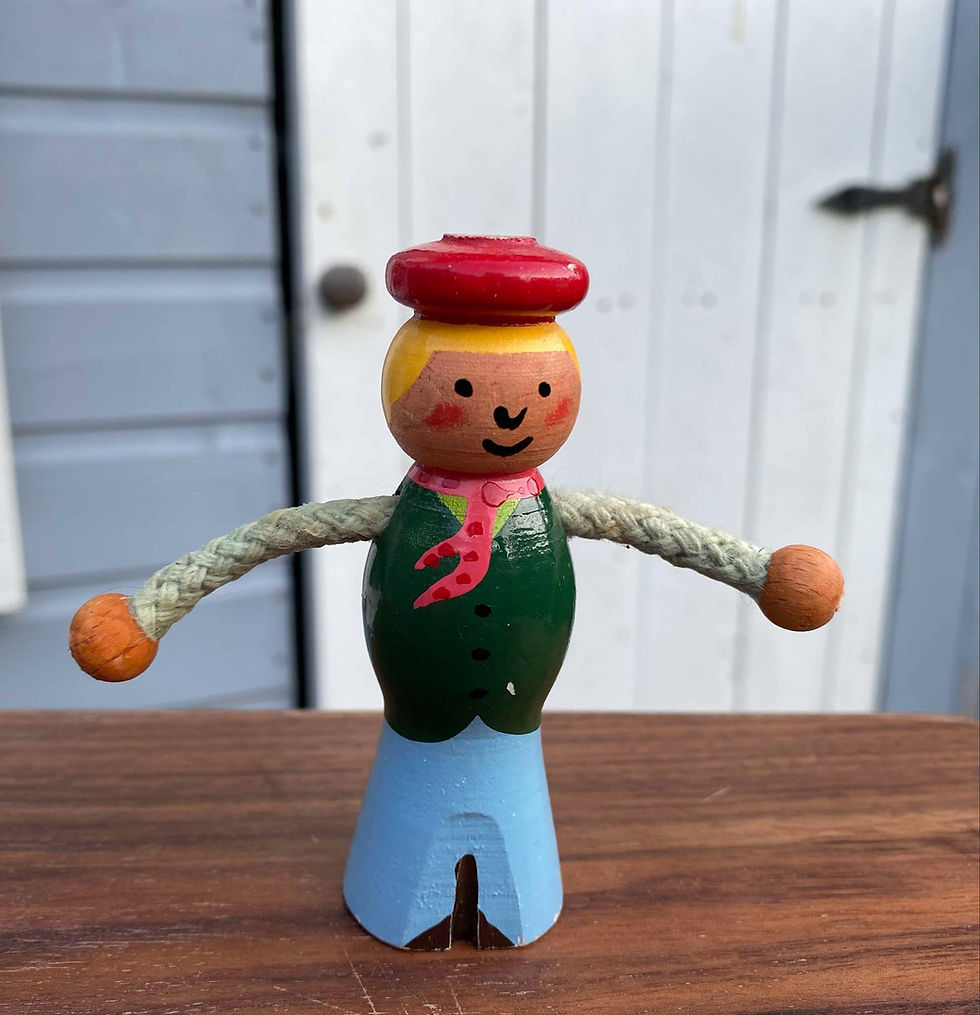


Show the Code: Which letters are graphemes and what is their sound (phoneme) value?

MyReadie is being added to the MyWordz® technology, funded by Innovate UK.
Single click to see which letters are graphemes.
Hear the sounds and the word.
Double click to see the Phonemies®, which show the sound value.
Hear the sounds, see the sound symbols, hear the word.
This means that children are shown the mapping of any word, so prior knowledge of phoneme–grapheme correspondences doesn’t matter.
This boosts self-teaching and, when used with The 60 Second Spelling Routine, supports the storage of words in the orthographic lexicon for instant recognition in future reading, and accurate spelling when writing.