


Phonics Reform England: Not reading reform. Phonics reform. Improving phonics for the one in five at risk of struggling to read and spell.

Reform 5
-
Reform 1: Early Dyslexia Risk Screening
-
Reform 3: Self-Paced Phonics
-
Reform 4: Bidirectional Mapping
-
Reform 5: Technology That Shows the Code
The Reading Framework states: “Understanding that the letters on the page represent the sounds in spoken words underpins successful word reading. Pupils’ knowledge of the English alphabetic code, how letters or groups of letters represent the sounds of the language, supports their reading and spelling.” (Department for Education, 2023)
The same document further states: “This guidance explains why teachers themselves also need to understand the alphabetic code: evidence supports the key role of phonic knowledge and skills in early reading and spelling.”
Is this possible if teachers are unsure of the mapping of words outside of phonics lessons?
National guidance defines early word reading and spelling in terms of the relationship between spoken sounds and written letters. This framing applies to all words, including those often described in classroom practice as ‘tricky’ or irregular, where correspondences may be less transparent but still require coordination between phonemes and graphemes.
In reading, pupils are taught to decode by identifying graphemes in written words from left to right, saying the corresponding phonemes, and blending those phonemes to say the whole word (Department for Education, 2023, p. 47).
In spelling, pupils are taught to say a word clearly, segment it into phonemes, and select graphemes to represent each phoneme in writing (Department for Education, Writing Framework, 2025, p. 41).
The DfE expects teachers to extend programmes and apply phonics to all words, in all year groups, so that children continue to learn correspondences that have not yet been taught. Statutory spelling guidance further states that teachers should draw pupils’ attention to grapheme–phoneme correspondences that both do and do not fit with what has been taught so far (Department for Education, Spelling Framework, p. 75).S
Because Englsh is an opque orthography there is a clear gap between what synthetic phonics programmes teach and the code knowledge needed to read and spell words in KS1 and KS2, let alone KS3 and KS4. To reach the stage known in the research as orthographic mapping children need to transition into the self-teaching phase early and easily. Those at risk of struggle to connect speech and print need teachers who feel confident mapping words bidirectionally throughout the day. Is anyone checking how confident teachers are?
Since introducing MyWordz® bidirectional word-mapping technology, to 'Show the Code' we have found that being able to see which letters are graphemes, and their sound values, is as important for teachers as it is for students.
You cannot ask teachers to teach phonics if they cannot confidently map words themselves.
Moats has written about this repeatedly. In Teaching Reading Is Rocket Science, she points out that even experienced teachers show gaps in identifying speech sounds, spelling patterns and word structures, and that many struggle to distinguish digraphs from consonant blends.
Her point is particularly powerful: being a skilled reader does not require explicit knowledge of language structure, but being an effective teacher does. Teachers need this knowledge to explain accurately how spelling relates to pronunciation and meaning.
That is exactly the problem MyWordz® exposes, and helps solve.
What word mapping technology are you using? Let us know.

Reform 5: Technology That Shows The Code
On this page we explore word mapping technology makes the alphabetic code visible by showing which letters function as graphemes in a word and the speech sound value each represents.
This helps all children understand what phonics is intended to teach, but extends far beyond the limited set of around 100 grapheme-to-phonics (GPC) correspondences typically taught in synthetic phonics programmes. By making the full code visible across all words, it removes the need for guessing or memorising and supports accurate mapping between speech and print. For the 1 in 5 children who do not reach the self-teaching phase by age 7, this is transformative. It gives them independent access to the structure of words, which is essential for both reading and spelling, and is therefore vital if we are to prevent the dyslexia paradox.
English can be tricky!
"If you don't get it, check it!"
Here is the future of guided self-teaching.
Show the Code Training
ShowtheCode.com
Children are able to see which letters represent phonemes when words are mapped, and we can now do this automatically using word mapping technology. We can, and should, Show the Code to extend phonics and map words in both directions: print to speech for reading, and speech to print for writing.
Children in Reception mapping words with "Duck Hands, Speech Sound Lines and Numbers (Australia)

Are you orthographically mapping texts eg for read-alouds?
Orthographically map texts for read-alouds to give brains extra information to support orthographic learning.
Many weak readers have an underlying difficulty connecting letters and sounds. This shows them which letters are graphemes, and the read-aloud, especially if someone else reads it first, shows the sound value. A lite free version is available on Speedie Readies, and a downloadable version that can be adjusted for size and font is available within the Innovate UK funded MyWordz® technology.


Each word is segmented into graphemes, not individual letters. A grapheme is the letter or group of letters that represents one speech sound (phoneme). Every letter in the word belongs to a grapheme. Alternating colours show where one grapheme ends and the next begins, so the structure of the word can be seen at a glance. The first grapheme is black, the next is grey, and this pattern continues across the page. Split digraphs are shown in blue. Try the free Lite version of the Code Mapping Tool
To see the phonemes, use Innovate UK funded MyWordz® Technology, where Phonemies® reveal each sound value.


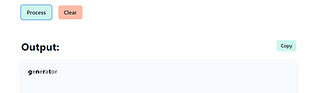
I saw this post on social media and thought 'good point'!
They also miss opportunities to map the words and explore print to speech, and speech to print correspondences not taught in their phonics programme.
My doctoral research centres around what this does to teachers too.
When they have to map words and show which letters are graphemes and give their associated ‘sounds’, teachers often get ‘blinded by the letters’ (orthographic interference in the research) and would likely map <g> <e> <n> <er> <a> <t> <or? rather than as expected when mapping phonemes and graphemes ie <g> <e> <n> <e> <r> <a> <t> <or> to British English.
They also miss that e and or map to the schwa in spoken language (across England).
So it’s not just kids that miss out, it’s the adults too.
Emma (Code Mapping Nerd) Hartnell-Baker
Why word mapping technology matters for everyone
One of the least recognised challenges in early literacy is that most adults are not confident in mapping words beyond those that are fully decodable within a phonics programme.
Within synthetic phonics programmes, there is a shared understanding of a defined set of grapheme–phoneme correspondences. Although their Phonics Pronunciation Code may differ, most are fairly predictable.
These are taught explicitly, practised, and applied to words that fit within that system. When a word aligns with what has been taught, many adults feel confident identifying the sounds and linking them to graphemes.
However, once words move beyond this taught content, and where accents differ, uncertainty increases.
English is not limited to a small set of correspondences. It contains many variations, alternative spellings, and pronunciations. In practice, this means that a large proportion of words children encounter cannot be easily mapped using only the grapheme–phoneme correspondences that have been explicitly taught. It is expected that children begin self-teaching.
In order to support children at risk of difficulties, adults are required to make decisions about how to segment words into sounds and assign graphemes. For many, this is not straightforward.
This is not a reflection of teacher ability. It reflects a gap in training and guidance.
Current policy expects phonics to provide the foundation for reading and spelling, but there is limited guidance on how to map words that fall outside of programme content. Teachers are therefore left to navigate this independently, often without a shared framework or reference point.
As a result:
-
different adults may map the same word in different ways
-
inconsistencies arise between programmes, classrooms and resources
-
learners may receive conflicting information
-
confidence can be affected for both teachers and pupils
This uncertainty is often hidden, because many adults can read words automatically. However, being able to read a word is not the same as being able to explain how its sounds and letters connect.
This becomes particularly important when supporting children who are finding learning to read and spell difficult.
For many learners, especially the 1 in 5 who are at risk of literacy difficulties, implicit learning is not enough. They require clear, consistent and explicit support to understand how words work.
If the adults supporting them are unsure how to map words, this support becomes harder to provide.
This is why word mapping technology is not just for children learning to read and spell.
It provides:
-
a consistent way to represent how sounds and graphemes connect
-
a shared reference point for teachers, parents and professionals
-
clarity when working with words beyond phonics programme content
-
support for decision-making in real time
Importantly, it reduces the cognitive load on adults as well as children.
Instead of having to rely on memory, intuition or inconsistent rules, both teacher and learner can see the speech–sound structure of the word clearly. This supports more accurate teaching, more confident learning, and more consistent outcomes.
For children at risk of literacy difficulties, this level of clarity is essential.
For the adults supporting them, it is equally important.
Without it, too much is left to interpretation.
With it, the connections between speech and print become visible, shared, and teachable.
Phonics Reform England will be making recommendations to the DfE on guidance as they expect teacher's to be doing this.
We will share details of word mapping technology on this page. Do you use and recommend word mapping technology? Let us know.
Speedy Paired Code Mapping with Mapped and also Non-Mapped Texts. This approach has been used very successfully in Australia.


Do parents and teachers need clearer guidance from the DfE, and the ability to check using word mapping technology when they’re unsure?
Not all parents feel confident supporting their child to map words.
This mum knows which letters are the graphemes and the phonemes in the word “story”. She checks that Spencer understands how speech and print connect.
Don’t all children deserve this support?

Why EdTech Training Matters as Much as the Technology
There’s a clear tension emerging in current DfE policy.
On one hand, the DfE is investing heavily in EdTech and AI innovation through initiatives such as the EdTech Testbed Programme and new AI tutoring projects. MyWordz® technology is currently being considered for the DfE EdTech Testbed Pilot.
At the same time, the DfE is becoming far more cautious about safety, safeguarding, cognitive impact, data protection, overreliance and staff training around digital tools and AI in schools.
The strongest evidence for this shift includes:
• The DfE’s new “Generative AI Product Safety Standards”, which explicitly say schools should assess whether AI products are safe for educational use and that suppliers must not exaggerate claims.
https://www.gov.uk/government/publications/generative-ai-product-safety-standards/generative-ai-product-safety-standards
• The government’s “safer digital childhood” consultation looking at screen time and addictive digital features.
https://www.gov.uk/government/news/government-launches-landmark-healthy-childhood-initiative
• Guidance emphasising that schools need trained staff, filtering and monitoring systems, DPIAs, safeguarding checks and clear governance before deploying AI tools.
https://www.gov.uk/guidance/meeting-digital-and-technology-standards-in-schools-and-colleges/filtering-and-monitoring-standards-for-schools-and-colleges
• DfE guidance on generative AI in education.
https://www.gov.uk/government/publications/generative-artificial-intelligence-in-education/generative-artificial-intelligence-ai-in-education
This matters because technology itself is not the intervention.
Buying word mapping technology without training adults to understand orthographic mapping, self-teaching and how to support children at their point of need risks reducing the technology to another passive screen activity.
The impact comes from knowledgeable adults using the technology responsively with children, so that speech sounds, graphemes and meaning become bonded in the orthographic lexicon during authentic reading and writing experiences.
Word Mapping Mastery Technology is intuitive for some teachers as they have good phonemic awareness and use the tech to check. Others may need word mapping training. Please ask about in-service training and also parent workshops.