Phonics Reform England: Not reading reform. Phonics reform. Improving phonics for the one in five at risk of struggling to read and spell.

Connecting Speech and Print
Words like “phonemes” and “graphemes” mean very little to a young child, but they can listen for speech sounds and think about what the “pictures” of those speech sounds might look like in written form.
Make it meaningful. Make it visual. Make it playful.
Before you know it, 3 and 4 year olds are beginning to understand complex concepts like our opaque orthography, without needing the grown-up terminology.
They start to notice patterns, connections, and that the same speech sound can be shown in different ways. That’s the beginning of real word mapping and self-teaching.

Letters and Sounds Phase 2: s, a, t, p, i, n (PSC+ Green Code Level Chant Strip)
m, d, g, o, c, k, ck, e, u, r, h, b, f, ff, l, ll, ss (PSC+ Purple Code Level Chant Strip)
Letters and Sounds Phase 3: j, v, w, x, y, z, zz, qu, ch, sh, th, ng, ai, ee, igh, oa,
oo, ar, or, ur, ow, oi, ear, air, ure, er
Letters and Sounds Phase 4: No new GPCs introduced
Letters and Sounds Phase 5: ay, ou, ie, ea, oy, ir, ue, aw, wh, ph, ew, oe, au,
ey, a-e, e-e, i-e, o-e, u-e
Letters and Sounds Phase 6: No formal GPC list introduced
PSC+ Yellow Chant Strip: j, v, w, x, y (3), z, zz, ch, sh, th (2), ng, ai, ee,
igh, oa, oo (2), eight (2)
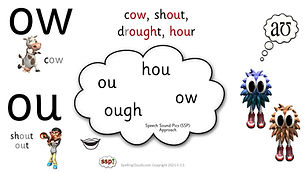
PSC+ Blue Chant Strip: ar, or, ow (2), oi, air, ur, er, ay, oy, ou (3), au, ir, ie (2),ue (2),
ea (2), ui (2), ey (2), aw, wh, ph, ew (2), ure (2), are (2), ear (2),a-e, e-e, ie-e, o-e, u-e (2)
We are not launching whole class phonics in England, these clips are to demonstrate that self-paced learning is possible! It's what we do in Australia.
When teaching graphemes <s> <a> <t> <p> <i> <n> think how many you aren't explicitly teaching!
You couldn't possibly. So how do we ensure that children can 'sound out' words with the others? By guiding self-teaching.
How does your synthetic phonics programme show the code used to connect speech and print?
Which routines do they use to bond speech sounds, graphemes and meaning in the brain word bank?
Are they showing you how to map ALL words? Or just those with taught GPCs?
If following the Letters and Sounds GPC phases the next GPCs are likely to be:
m, d, g, o c k ck e u r b f ff l ll le ss
If following the Letters and Sounds GPC phases the next GPCs are likely to be:
j w x y z ch sh th ng ai ee igh oa oo eigh
If following the Letters and Sounds GPC phases the next GPCs are likely to be: ar, or, ow (2), oi, air, ur, er, ay, oy, ou (3), au, ir, ie (2),ue (2),ea (2), ui (2), ey (2), aw, wh, ph, ew (2), ure (2), are (2), ear (2),a-e, e-e, ie-e, o-e, u-e (2)